Line

A step-by-step playbook for credit and risk teams, from raw borrower data to live scoring decisions, without a data science team.

Most lenders know their loan sanction process is too slow. The harder question is why and what it takes to fix it without breaking everything else.

Static scorecards-built years ago don’t reflect how borrowers behave today. Model development sits with specialist teams, creating a permanent gap between risk strategy and execution. Decisions leave no audit trail. The result is longer loan turnaround times, inconsistent credit decisions, and higher operational costs that directly affect customer experience and portfolio performance. And moving faster on approvals always seems to mean accepting more risk.

This guide addresses all of it, practically, step by step.

What’s Inside

Seven Sections. Every Step From Data to Live Decisioning.

No theory. No vendor pitches. A practical walkthrough of how credit and risk teams deploy ML-powered credit scoring through a modern credit decision engine, with workflow diagrams at every step.

Why Static Scorecards Fail: what changes when your model learns from your own borrower outcomes to improve credit scoring accuracy.

Data Integration and Preparation: which sources to use, how to structure them, and what the platform validates before training begins.

Model Training: how no-code model building works, and what KS Score, Gini Index, and ROC-AUC actually mean for your credit team.

Validation and Testing: single case and bulk testing explained, plus how reason codes help analysts review borderline applications faster

Deploying The Scoring Model: how API generation works and how to connect it to your LOS without custom development, and how it powers a real-time credit decision engine

Monitoring, Fairness and Compliance: how to keep your model accurate, unbiased, and audit-ready over time

Real-World Use Case: how a mid-sized NBFC replaced a 25-point manual scorecard, accelerated loan sanctions and cut average sanction time from 4–6 days to under 24 hours.

This guide answers the questions your team is already asking:

If you’re a Credit Risk Manager. how do you justify an ML-driven approval decision to a regulator or credit committee while improving the loan approval process?

If you’re a Risk Analyst. how do you build and test a credit scoring model without depending on a data science team?

If you’re in Lending Operations how do you scale loan sanctions and credit decisions without scaling your analyst headcount?

If you’re on Fintech Product or Tech Team: how do you integrate a credit decision engine and scoring API into your LOS, and how long does it actually take?

By the numbers:

  • Scoring decisions returned in under 5 seconds
  • Models built and validated in minutes, not months
  • Zero dedicated data science team required to operate day-to-day
  • Full explainability on every live decision for audit and compliance

Get the Full Guide. Free.

Enter your work email to unlock the complete guide.

    Line

    INTRODUCTION

    The Problem with How Loan Sanctions Work Today

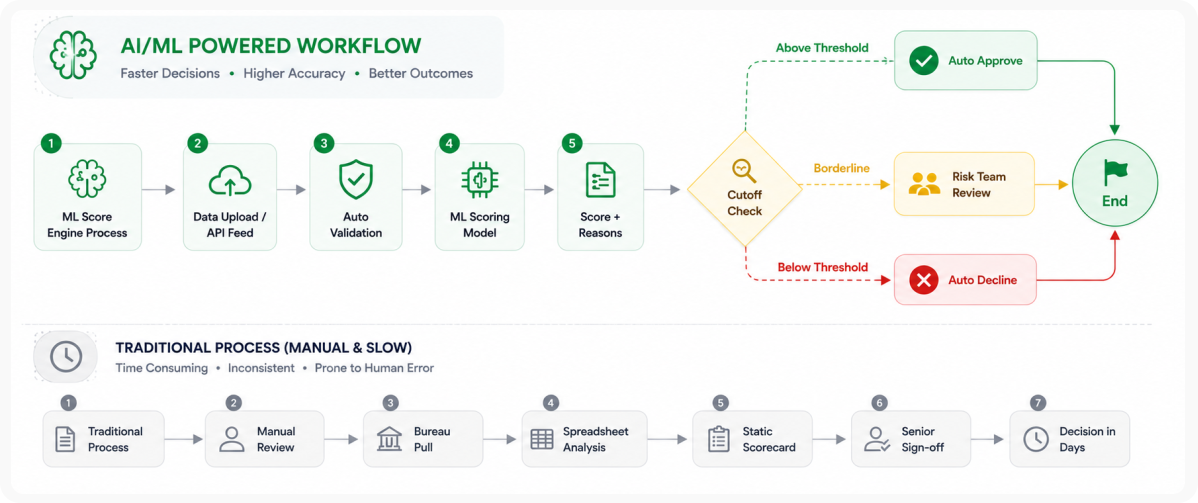
    For most banks and NBFCs, the loan approval process still looks something like this before loan sanctions are issued: a credit officer receives an application, pulls a bureau report, manually reviews bank statements, fills a spreadsheet, applies a points-based scorecard built years ago, and escalates to a senior for sign-off. The process takes days. Sometimes weeks.

    Loan sanction workflow illustration

    The problems compound quickly:

    • Inconsistent decisions : Two analysts reviewing the same application may reach different conclusions based on judgment, experience, or workload
    • Slow turnaround : manual review creates queues, and queues lose borrowers to faster competitors
    • Static risk models : a scorecard built in 2019 doesn’t reflect 2026 borrower behavior, market conditions, or default patterns
    • No explainability : when a decision is questioned by a regulator or an internal auditor, there’s no clean trail of why it was made
    • Operational cost : every manually reviewed application carries a people cost that doesn’t scale

    Result : Lenders are either too slow to compete or too loose to stay safe, leading to delayed loan sanctions and inconsistent lending decisions.

    What Changes With ML-Driven Scoring

    Fintly’s ML Scoring replaces the static scorecard with a dynamic, no-code credit scoring and credit decision engine that learns from your own historical loan data. Instead of a fixed points table, it builds a machine learning model trained on your borrowers, their profiles, behaviors, and outcomes.

    The difference in practice:

    The goal is to give your credit team better tools so routine loan approval process decisions happen automatically, borderline cases surface with full context, and every outcome is traceable.

    ML Scoring Comparison

    Section 01 : Data Integration and Preparation

    Start With the Data You Already Have for Better Credit Scoring

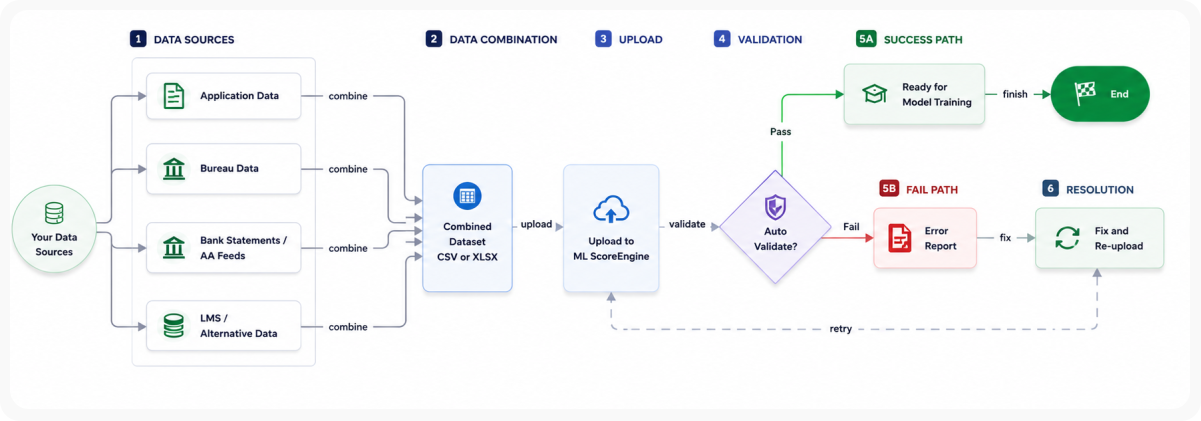
    The ML ScoreEngine doesn’t require a data science team to prepare inputs. It powers accurate credit scoring using the structured datasets your credit operations already produce, and can incorporate richer sources when available.

    Supported data sources:

    Application data : borrower demographics, employment, income, loan amount requested

    Credit bureau data : credit score, DPD history, existing obligations, enquiry trends

    Bank statement data : cashflow patterns, EMI bounces, salary credits, average balances

    Alternative data : transaction behavior, repayment history from your own LMS

    The platform accepts CSV and XLSX formats; the same files your analysts already work with. No reformatting, no custom ETL pipeline required before you start.

    Traditional Scorecard ML Scoring
    Built once, updated rarely Retrained as new data arrives
    Points assigned by expert judgment Weights learned from actual outcomes
    Same model for all borrower types Configurable per segment or product
    Limited to structured bureau data Works with structured, unstructured, and alternative data
    Decision logic is opaque Reason codes on every output
    Days to loan sanctions Decisions in under 5 seconds

    Upload and Validation

    Once your dataset is ready, upload it directly to the ML Scoring web application. The platform automatically runs:

    • Schema validation : checks column structure and data types
    • Missing value detection : flags incomplete fields before training begins
    • Duplicate checks : prevents contaminated training data, handled by ML model
    • Target column verification : confirms the outcome variable (approved/defaulted) is correctly mapped

    If something is wrong, the platform tells you exactly what to fix before allowing training to proceed. No silent failures.

    Minimum dataset requirement :
    1,000 records or higher for improved reliability in model training.

    Data Sources

    Section 02 : Model Training and Scoring Model Creation

    Building the Credit Scoring Model (No Code Required)

    Once your dataset clears validation, training begins with a single action. Name your model, select your target column, and the ML ScoreEngine handles the rest.

    What happens under the hood:

    • The platform runs algorithm selection and training automatically
    • It evaluates multiple model configurations against your data
    • It outputs the best-performing model based on your dataset’s structure and outcome distribution

    There is no code to write. No algorithm to select manually. No hyperparameter tuning required from your team.

    Training completes in minutes.
    Ready to be run by your risk analysts.

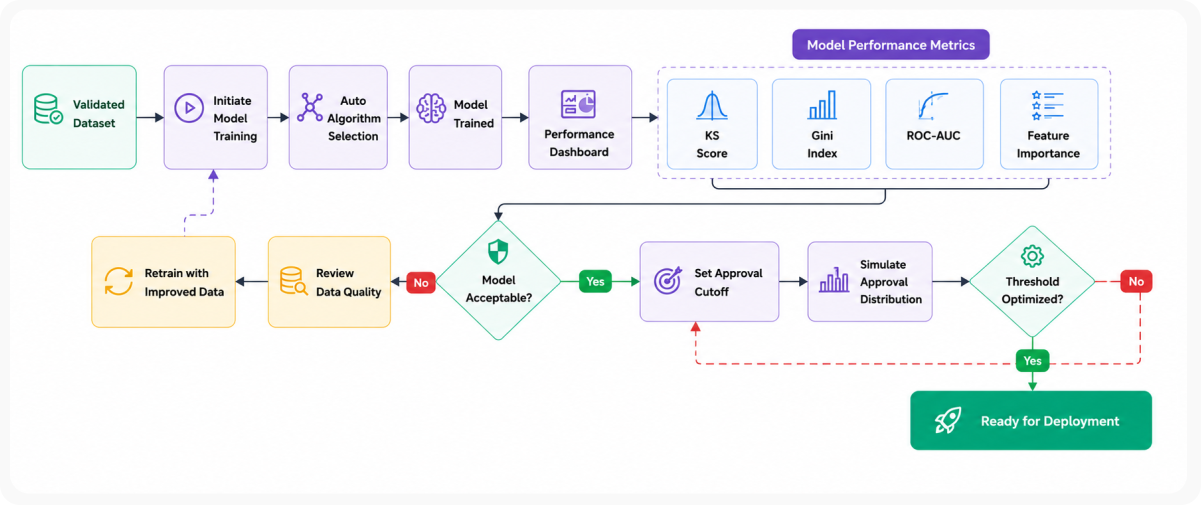
    Understanding Credit Scoring Model Performance

    After training, the ML ScoreEngine surfaces a full performance dashboard so your team understands exactly what the model has learned and how reliable it is.

    Metric What It Tells You
    KS Score How well the model separates good borrowers from bad ones
    Gini Index Overall model accuracy, higher is better
    ROC-AUC Predictive power across all possible thresholds
    Feature Importance Which variables drive approval vs default most strongly
    Class Distribution Balance of good/bad outcomes in your training data

    These metrics serve two audiences: your risk team (is this model good enough to deploy?) and your compliance team (can we justify this model to a regulator?)

    Setting the Loan Approval Process Threshold

    This is where strategy meets scoring. The ML Scoring dynamic cutoff slider lets your team set the score threshold above which a loan is approved, and see the impact in real time.

    • Move the cutoff higher : fewer approvals, lower default risk.
    • Move the cutoff lower : more approvals, higher portfolio growth, managed risk increase.

    The platform recalculates the approval/rejection distribution instantly as you adjust, so your risk head can simulate the portfolio impact of any threshold decision before committing.

    This is the core of modern credit decision engine. Static scorecards set a cutoff once. ML ScoreEngine lets you adjust it as market conditions, portfolio health, or growth targets shift.

    Model Performance Metrics

    Section 03 : Validation and Testing

    Test Your Credit Scoring Model Before You Deploy

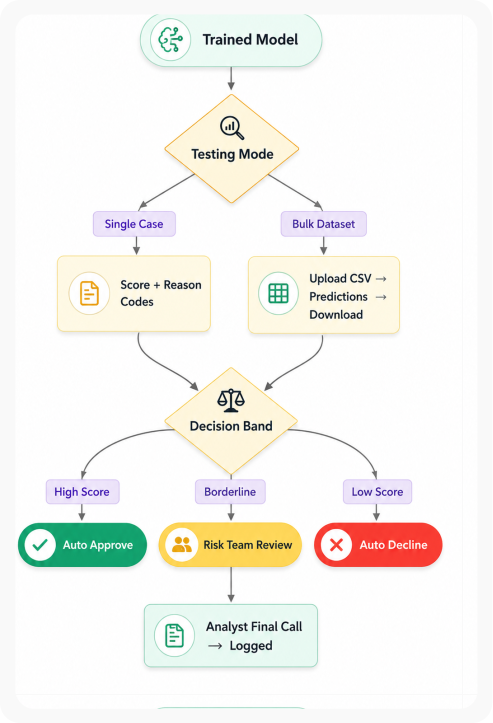
    No scoring model should go live without validation. The ML ScoreEngine supports two testing modes to validate credit scoring accuracy before production deployment.

    Single Test Scoring

    Submit one borrower record manually. Enter the input fields, get back a score, decision, and reason codes instantly. Use this to:

    • Spot-check model behavior on specific borrower profiles
    • Walk a credit committee through how the model decides
    • Test edge cases before batch deployment

    Bulk Test Scoring

    Upload a holdout dataset e.g. the loan applications the model hasn’t seen and run predictions across the full batch. Review:

    • Row-level scores and Approve/Decline outputs
    • Invalid row flags (missing or malformed inputs)
    • Score distribution across the test population
    • Downloadable results for offline analysis

    Trained Model

    How Risk Teams Use Reason Codes in Review

    For borderline cases like the applications that score close to the threshold, the ML Scoring surfaces reason codes and feature importance on every output. This gives your credit team the context to make a faster, more informed manual review.

    Instead of re-reviewing the full application from scratch, a risk analyst sees:

    • The top factors that pushed the score down (e.g., high EMI obligation ratio, recent bureau enquiries, irregular salary credits)
    • The factors working in the borrower’s favor (e.g., stable cashflow, long employment tenure)
    • The confidence level of the prediction

    This is a structured brief that makes human review faster, more consistent, and fully documented.

    Section 04 : Deploying the Scoring Model for Production

    From Trained Model to a Live Credit Decision Engine

    Once your model is validated and your threshold is set, deployment is a single action. The ML ScoreEngine automatically generates:

    • A production-ready REST API endpoint for real-time scoring
    • A CURL file for immediate developer reference and integration testing

    From this point, your loan origination system, LMS, or any external decisioning workflow can call the scoring API at the moment an application is submitted, and receive credit scoring results, lending decisions, and reason codes in under 5 seconds.

    Integrating the Credit Decision Engine Into Your Lending Workflow

    The API connects to whatever system your team already uses. No custom development is required from Fintly; your engineering team configures the connection on your LOS or LMS end.

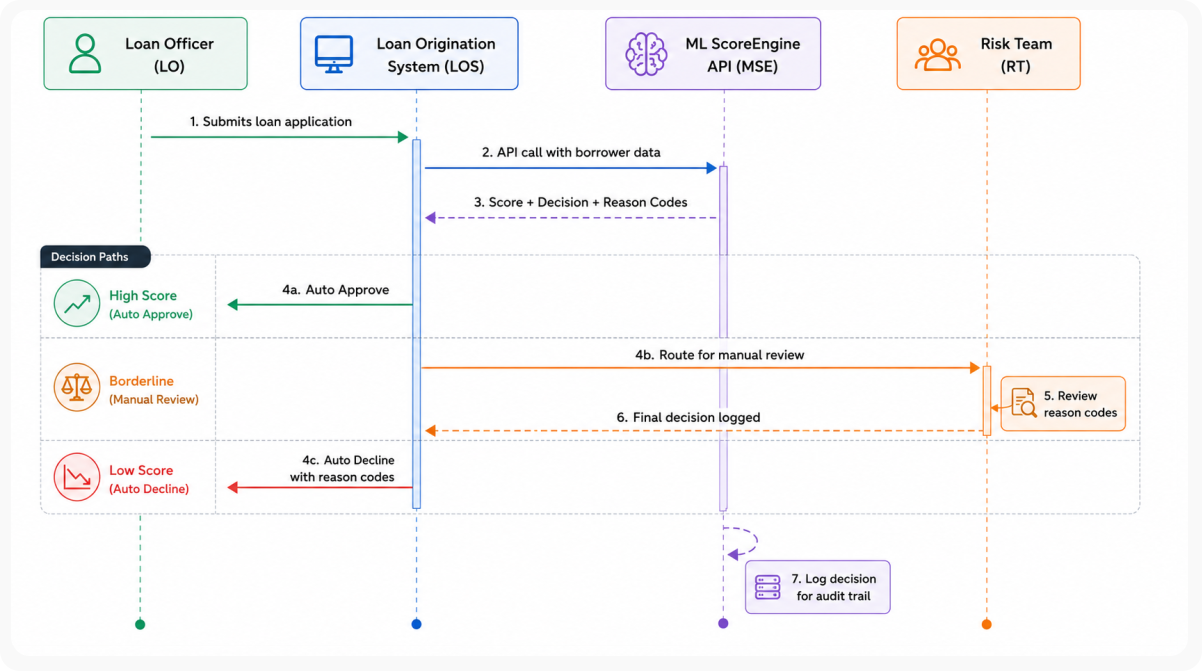
    What the integration looks like in practice:

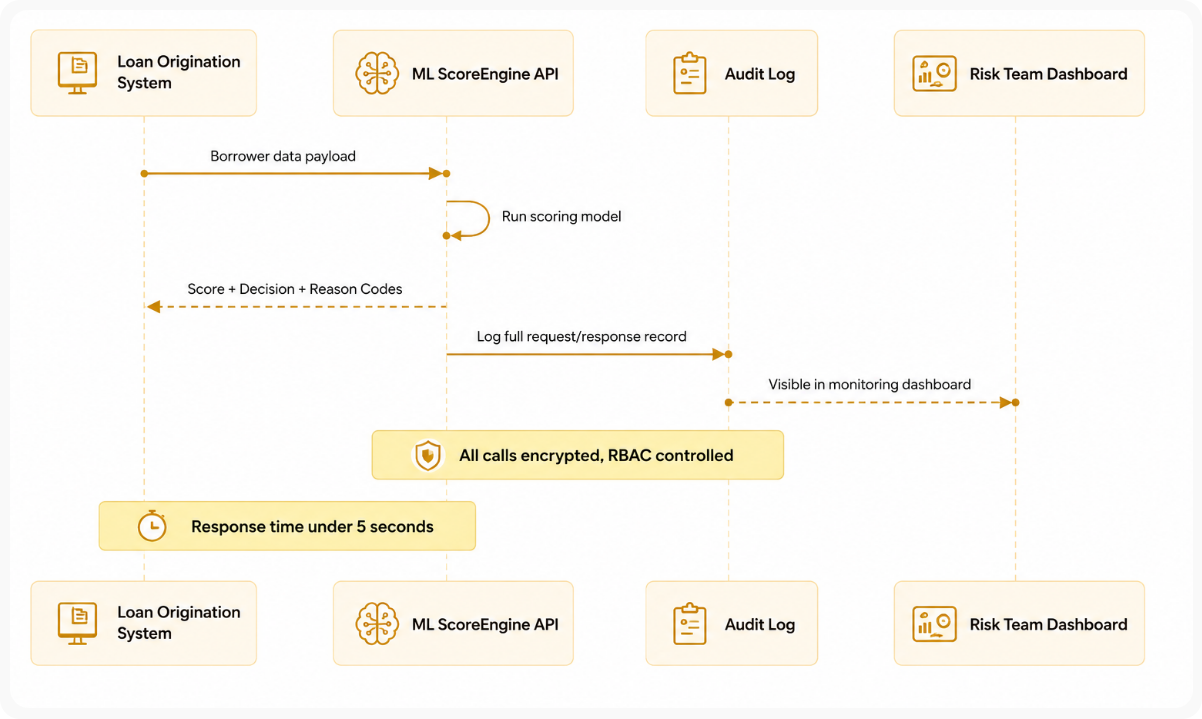
    • Loan officer submits application in your LOS
    • LOS calls the ML Scoring API with borrower data
    • ScoreEngine returns: score + Approve/Decline + reason codes
    • LOS routes the application automatically based on the decision
    • Full scoring record logged for audit

    For teams that want to add rule-based logic on top of scores, for example, auto-approve only if score is above threshold AND loan-to-value is below a set limit, Fintly’s Business Rule Engine can be configured alongside ML Scoring as a custom setup.

    Scoring Model

    Section 05 : Monitoring and Updating the Scoring Model

    Keeping Your Credit Scoring Model Current

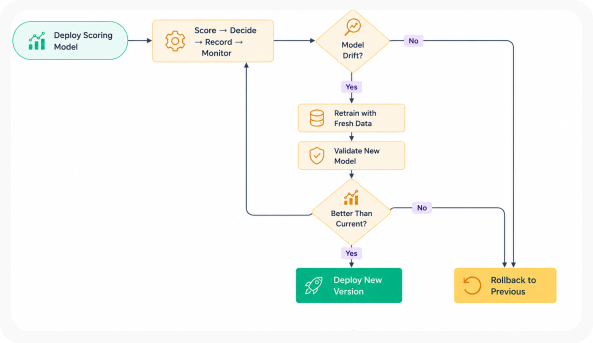
    A credit scoring model trained today reflects borrower behavior and market conditions from your historical data. Over time, conditions change — economic cycles shift, borrower profiles evolve, new fraud patterns emerge. If your model isn’t updated, its predictive power degrades. This is called concept drift.

    The ML ScoreEngine’s monitoring dashboard gives your team continuous visibility into:

    • Score distributions :
      are scores shifting across your portfolio?
    • Approval and decline rates :
      are they moving in expected directions?
    • Model performance metrics :
      KS, Gini, ROC-AUC tracked over time
    • Anomaly flags :
      unusual patterns in scoring outputs

    When performance metrics start declining, it’s time to retrain. The process is the same as the original build, upload fresh data, retrain, validate, and redeploy. Versioning and rollback mean you can revert to a previous model instantly if a new version underperforms.

    Fairness and Compliance Monitoring

    Speed and accuracy matter — but in lending, so does fairness. A scoring model that produces biased outcomes across borrower segments creates regulatory exposure, reputational risk, and decisions your compliance team cannot defend.

    The ML Scoring includes a built-in fairness monitoring layer that runs continuously alongside model performance:

    • Bias checks :
      monitors score distributions across borrower segments to detect systematic disadvantage
    • Parity monitoring :
      tracks approval and decline rates across groups to surface disproportionate outcomes
    • Remediation workflows :
      when parity issues are detected, the platform flags them for review and supports corrective action before deployment
    • Immutable audit logs :
      every model version, policy change, and scoring override is logged and cannot be altered — creating a complete, defensible record for internal audit and regulatory inspection
    • Consent and purpose binding :
      every scoring run is tied to explicit consent and a defined use purpose, aligned with data governance requirements

    The result: your credit team scores faster, your risk team monitors continuously, and your compliance team has the documentation to stand behind every decision — not just the outcomes, but the process that produced them.

    Deploy Scoring Model

    The Continuous Improvement Loop

    The real power of ML-driven scoring is the feedback loop. Every decision the model makes and every outcome that follows, becomes data for the next model iteration. Over time, the scoring model gets sharper, your threshold calibration gets more precise, and your portfolio decisions get more consistent.

    Section 06 : Use Case

    How a Mid-Sized NBFC Accelerated Loan Sanctions and Modernized Its Loan Approval Process.

    The following is an illustrative scenario based on typical deployment patterns.

    The Situation

    A mid-sized NBFC processing personal and MSME loans was operating with a 25-point manual scorecard built in 2021. Their average loan sanctions turnaround time was 4-6 working days. Credit analysts spent 60 – 70% of their time on data gathering and manual spreading, leaving limited bandwidth for judgment-intensive cases.

    Key pain points:

    • Inconsistent decisions across branches
    • High operational cost per loan sanction
    • No audit trail on why specific applications were approved or declined
    • Static scorecard couldn’t adapt to changing borrower profiles post-COVID

    The Approach

    The NBFC’s risk team uploaded 18 months of historical loan data into the ML ScoreEngine. No data science team was involved. A senior risk analyst ran the entire setup.

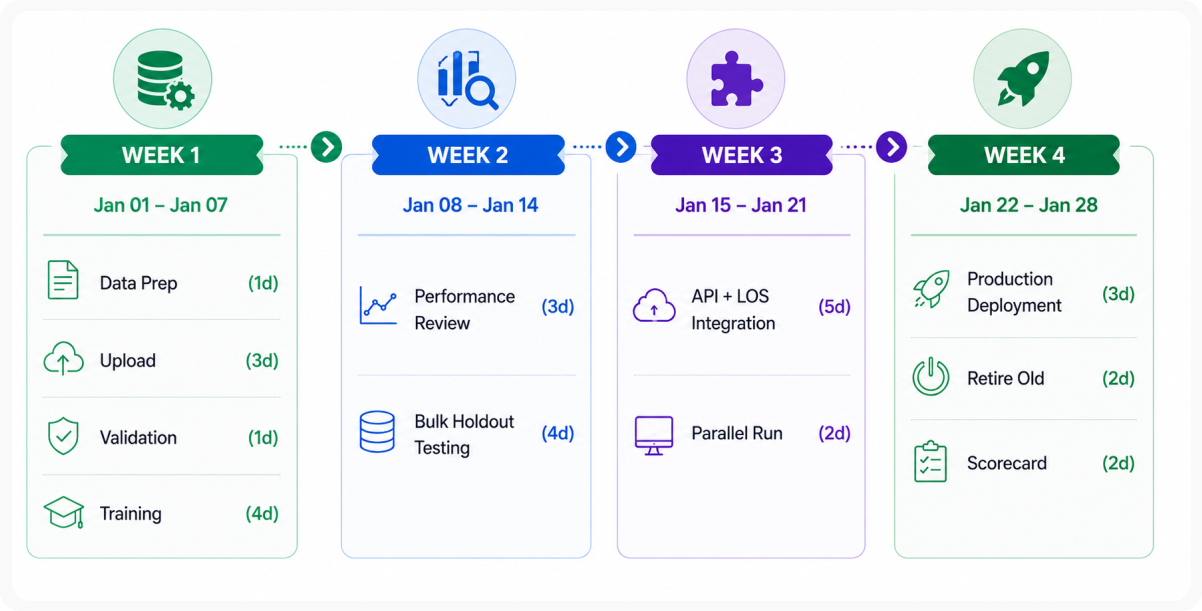
    The platform trained the first model in minutes. What took four weeks wasn’t the technology, it was the organizational process of reviewing performance, running parallel with the old scorecard, and getting credit committee sign-off before full deployment.

    Week 1 : Dataset uploaded, validated, and first credit scoring model trained – Same day.

    Week 2 : Model performance reviewed (KS: 42, ROC-AUC: 0.81), cutoff threshold set, bulk testing completed on 3 months of holdout data

    Week 3 : API integrated into their existing LOS, parallel running with old scorecard

    Week 4 : Full production deployment, old scorecard retired

    The Outcome

    After full deployment, the NBFC’s credit operations looked significantly different:

    Metric Before ML ScoreEngine After ML ScoreEngine
    Average sanction time 4-6 working days Under 24 hours for auto-decisions
    Analyst time on data gathering 60-70% of workload Redirected to borderline and complex cases
    Decision consistency Variable across branches Standardized, same model, same logic
    Audit readiness Manual records, incomplete trails Full reason codes and decision logs on every case
    Model update cycle Every 2-3 years Can retrain anytime

    The Risk Team’s Perspective

    A credit risk manager at the NBFC noted:

    “The biggest shift wasn’t the speed, it was the confidence. When a regulator asks why we approved a loan, we can show exactly what the model saw, what score it produced, and what threshold we were operating at that month. That level of accountability wasn’t possible before.”

    “And when the market tightened earlier this year, we moved our cutoff threshold up within a day. With the old scorecard, that would have taken weeks of committee approvals and manual recalibration.”

    Section 07 : Product Integration Tips

    Connecting Your Credit Decision Engine to Your Lending Stack

    The ML Scoring Model is designed to connect to your existing lending infrastructure without requiring a rebuild. Once your model is deployed and your API endpoint is generated, your engineering team configures the connection on your LOS, LMS, or decisioning system end.

    What integration typically involves:

    • Mapping your application data fields to the API input schema
    • Configuring the API call trigger point, at application submission, pre-sanction, or both
    • Setting up response handling, routing Approve/Decline/Review outcomes within your system
    • Enabling logging of API responses for audit purposes

    The platform supports both real-time credit scoring and batch credit scoring for portfolio review or pre-screening. (synchronous API call at application time, decision returned in under 5 seconds) and batch scoring (asynchronous bulk processing for portfolio review or pre-screening).

    Security and Compliance

    Every API call to the ML ScoreEngine is:

    • Encrypted in transit and at rest
    • Logged with full input and output records
    • Access-controlled via role-based permissions, only authorized systems and users can trigger scoring

    This means every loan approval process decision made through the credit decision engine is fully traceable, who triggered it, what data was submitted, what score was returned, and what decision was output. Your compliance and internal audit teams have a complete record without any additional reporting effort.

    ML ScoreEngine API Call

    Conclusion

    What Changes When You Deploy an ML-Powered Credit Decision Engine

    The shift from manual underwriting to ML-driven scoring changes how your credit team works, how your portfolio performs, and how your institution handles accountability.

    What your operations gain:

    • Speed : routine loan approval process decisions and loan sanctions completed in under 5 seconds.
    • Consistency : same model, same logic, same standard across every branch and analyst
    • Explainability : every decision comes with reason codes your team and regulators can read
    • Adaptability : adjust your cutoff threshold in response to market conditions without committee cycles
    • Auditability : complete decision trails from day one, ready for internal audit or regulatory inspection
    • Self-sufficiency : your risk team runs the model, sets thresholds, and retrains without engineering dependency

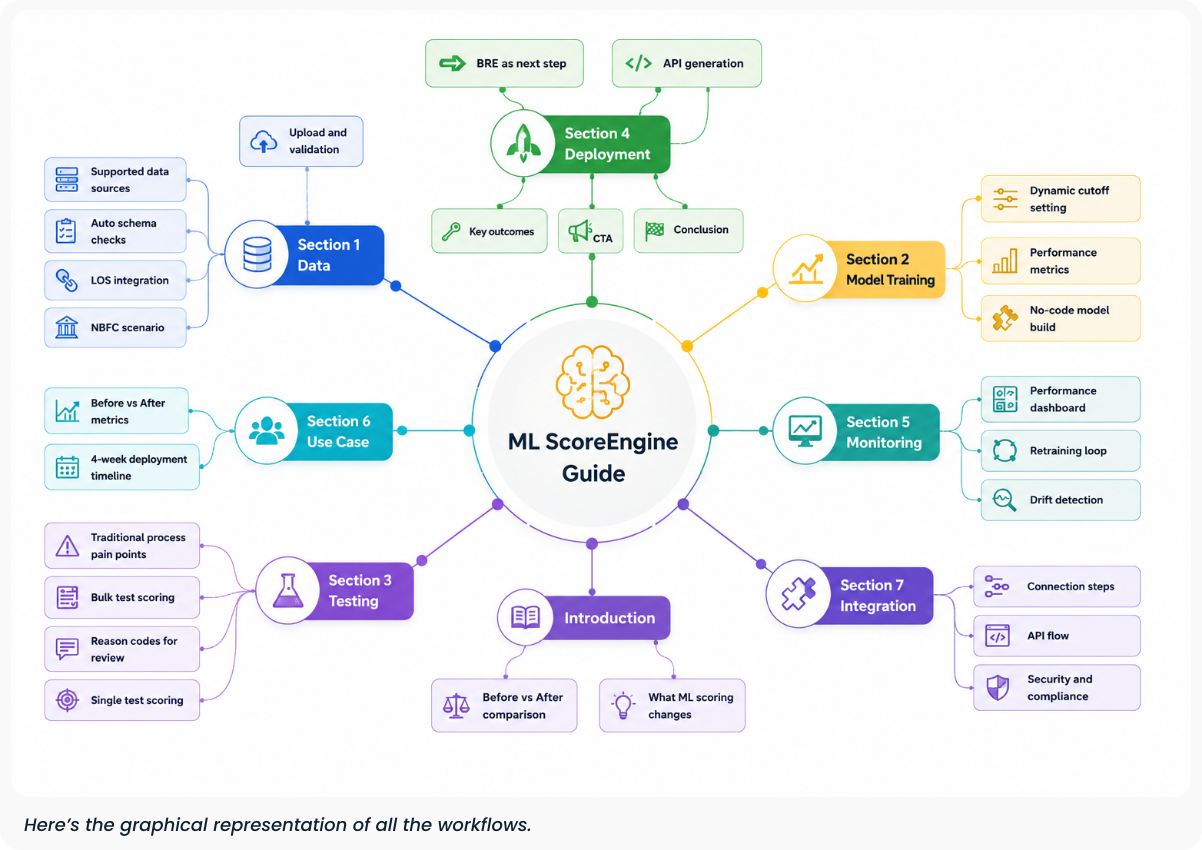
    ML ScoreEngine Guide workflows mind map

    The Question Worth Asking

    What would your loan book look like if every routine credit scoring decision was made in seconds, every loan approval process was faster, and loan sanctions were backed by a transparent credit decision engine?

    That’s what ML ScoreEngine is built to deliver, starting in week one.

    © 2026 fintly.co. All Rights Reserved.