Summary: Automated credit scoring reduces loan approval time by replacing manual document reviews with machine learning models that instantly analyze applicant data, assess risk, and generate a definitive approval or rejection decision. This eliminates underwriting bottlenecks, allowing lenders to process applications in seconds instead of days.
A borrower applies for a loan on a Tuesday. By Thursday, they are still waiting for a decision. In the modern lending landscape, a three-day wait is a lost customer. Traditional credit underwriting processes, reliant on manual data entry and spreadsheet-based risk models, are simply too slow to meet borrower expectations.
The solution is not hiring more analysts. The solution is upgrading the system. Transitioning to automated credit scoring allows lenders to scale their operations efficiently. This post breaks down the exact workflow required to move from manual checks to instant decisions, demonstrating how automation directly translates to faster loan approvals.
Shifting from manual reviews to automated credit scoring is the fastest way to scale a lending portfolio without proportionally increasing risk or headcount. Teams using Fintly’s Machine Learning Scoring module bypass traditional bottlenecks entirely. By deploying a no-code AI underwriting process, lenders can evaluate structured data, apply dynamic cutoffs, and return explainable credit decisions in real time.

The Hidden Costs of Slow Credit Underwriting
When credit underwriting relies on manual human evaluation, delays are inevitable. Analysts must pull bureau reports, verify income, cross-reference internal policies, and manually calculate risk ratios.
This friction creates operational drag. According to a McKinsey report on risk operating models, traditional, heavily manual risk processes can consume up to 40% of an underwriter’s time just gathering and standardizing data. That is time spent doing data entry, not risk analysis.
Slow approvals actively damage conversion rates. Borrowers seeking working capital (the funds a business uses for day-to-day operations) will typically take the first approved offer they receive. If your credit decision automation is lacking, your competitor wins the deal. To secure faster loan approvals, the evaluation must happen the moment the application is submitted.
How Does Automated Credit Scoring Work?
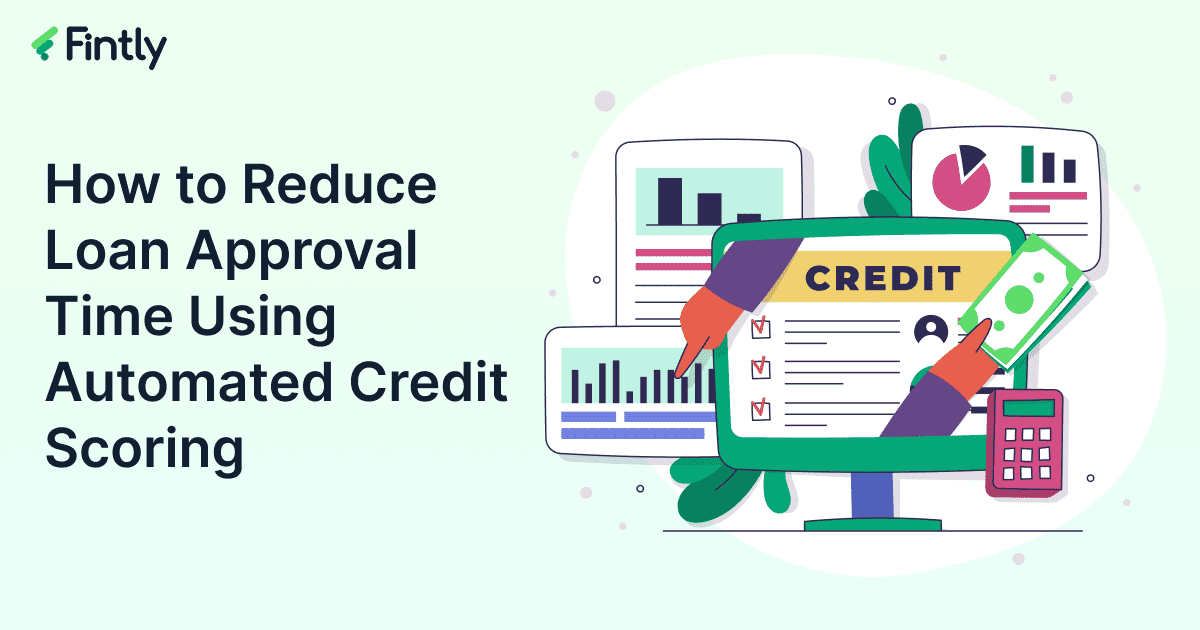
Automated credit scoring leverages machine learning to evaluate a borrower’s profile against thousands of historical data points instantly. Instead of a human checking a handful of rules, the algorithm identifies complex patterns and assigns a precise probability of default.
The core of an effective AI underwriting process is speed, accuracy and explainability. Under Reserve Bank of India (RBI) guidelines, digital lenders must ensure their models are transparent and fair. You cannot just deny a loan; you must know why.
Modern automated credit scoring platforms solve this by providing Built-in XAI (Explainable AI). When a decision is rendered, the system simultaneously outputs reason codes, such as “high credit utilization” or “insufficient bureau history.” This ensures that achieving faster loan approvals does not come at the expense of regulatory compliance or internal auditability.
The Workflow: From Application to Instant Scoring
To understand how credit decision automation practically functions, we must look at the step-by-step workflow. Here is how unified financial intelligence transforms a raw application into a funded loan.
Step 1: Data Ingestion
The applicant submits their details via an online portal. The system instantly ingests structured data, such as income, age, credit score, and existing obligations, via REST APIs. No manual data entry is required.
Step 2: Model Execution
The automated credit scoring engine takes over. The data is fed into a pre-trained machine learning model. The engine evaluates the profile, running it through predictive algorithms tailored to your specific lending product.
Step 3: Threshold Application
The model generates a raw risk score. The system then applies your custom cutoff rules. If the applicant scores above a 0.75 probability of repayment, they are automatically approved. If they score below 0.40, they are declined.
Step 4: Instant Output
Within milliseconds, the AI underwriting process returns the final decision, alongside the specific features that drove that outcome. The borrower receives an immediate response.
How Does Manual Underwriting Process Compares with AI Underwriting Process ?
Understanding the structural difference between traditional methods and credit decision automation clarifies why the transition is necessary for scale.
Table 1: Comparing Manual Underwriting to Automated Credit Scoring
| Feature | Manual Credit Underwriting | AI Underwriting Process |
| Speed | Hours to days per application. | Milliseconds per application. |
| Consistency | Subject to analyst fatigue and bias. | 100% deterministic and rule-driven. |
| Scalability | Requires hiring more staff to grow. | Handles high-volume bulk scoring instantly. |
| Adjustability | Takes weeks to retrain staff on new policies. | Cutoffs adjusted instantly via a digital slider. |
The Role of Credit Decision Automation in Scaling Portfolios
As lending portfolios grow, maintaining asset quality becomes exponentially harder. If your credit underwriting remains static, a surge in application volume will inevitably lead to processing backlogs.
To build an ML scoring system that scales, lenders need tools that empower business users. Relying on an IT team to write custom scripts every time a risk parameter changes is inefficient. PwC notes that financial institutions leveraging advanced automation and AI in their risk functions see significant improvements in operational resilience and cost reduction.
Modern automated credit scoring platforms are no-code. A risk manager can upload historical performance data, automatically train a model, adjust the approval cutoff threshold, and deploy a scoring API without writing a single line of code. This democratizes credit decision automation, allowing the business to react to macroeconomic shifts immediately.
The result is a resilient lending operation capable of processing thousands of applications simultaneously, ensuring faster loan approvals without compromising on risk governance.
Conclusion
The era of making borrowers wait days for a loan decision is over. By transitioning from manual credit underwriting to an AI underwriting process, lenders can eliminate operational bottlenecks, ensure absolute consistency, and drastically improve the borrower experience. Automated credit scoring is not just a technological upgrade; it is a fundamental shift toward scalable, intelligent lending.
If slow manual reviews are costing your team deals and increasing operational overhead, it is time to upgrade your risk engine. Book a Demo of Fintly’s ML ScoreEngine today.

QUICK ANSWERS
Frequently Asked Questions (FAQs)
Your most common questions, answered with precision and insight
Automated credit scoring uses machine learning algorithms to instantly evaluate a borrower’s structured data against historical risk patterns. Instead of manual reviews, the system calculates a probability of default and applies pre-set thresholds to automatically approve or decline the application.
With credit decision automation, standard loan approvals should take only a few seconds. The AI underwriting process evaluates the data and returns an API-driven decision almost instantly, eliminating the traditional multi-day wait.
The process requires structured data inputs such as applicant age, income, credit bureau scores, employment history, and existing debt obligations. The automated credit scoring model uses these fields to determine the applicant’s risk profile.
Yes, it can. While salaried profiles are straightforward, advanced automated credit scoring models can be trained on alternative data and cash-flow indicators to accurately assess the risk of self-employed applicants.
Faster loan approvals directly increase conversion rates. When a borrower receives an instant approval via an AI underwriting process, they are far less likely to abandon the application or seek out competing offers from other lenders.

Author
Subject Matter Expert (Lending) Fintly.co
Vijay Mali is a results-driven professional with deep expertise in HFC/NBFC startups, compliance, and underwriting. He specializes in delivering end-to-end solutions for financial institutions, focusing on Business Rule Engines (BRE), workflow automation, and AI-driven credit decision-making. He is passionate about leveraging Machine Learning (ML) scorecards and AI-powered risk assessment to optimize lending processes and drive digital transformation in the financial sector.