Fintech platforms are scaling faster than ever, but their internal compliance frameworks often lag dangerously behind. Regulators do not give digital challengers a pass. If your internal compliance team treats every operational vulnerability with equal weight, spending as much time checking marketing copy as they do transaction monitoring, you are burning capital and leaving massive blind spots exposed. You need a targeted, data-driven defense strategy.
A risk-based audit fintech model forces your organization to focus resources strictly on the highest-impact threats, such as anti-money laundering (AML) failures or third-party data breaches. By prioritizing the severity and likelihood of an event, financial platforms can proactively shut down regulatory threats before they trigger millions in penalties. For companies needing an immediate structural baseline, deploying a specialized compliance framework like the Fintly‘s Trust Audit provides the necessary infrastructure to execute a flawless risk-based audit fintech strategy from day one.

What is a Risk Based Audit in Fintech?
A risk-based audit fintech approach is a methodology that allocates compliance, testing, and monitoring resources dynamically, based entirely on the measured severity and probability of specific risks occurring within your organization.
Traditional audits follow rigid, calendar-based checklists. They review every department sequentially. If your core payment gateway gets the exact same audit depth as your internal employee expense software, your system is broken. A dedicated fintech risk audit breaks this static cycle. It analyzes the company’s current operational landscape, identifies where the regulatory or financial blowback would be most severe, and points the audit spotlight squarely at those high-stakes targets.
Building a reliable risk audit process fintech teams can trust means shifting away from a pass/fail mentality. Instead, compliance becomes a strategic mechanism to protect liquidity and brand trust. By leveraging a risk-based audit fintech framework, leadership can confidently answer exactly where the company is most vulnerable at any given moment.
The Core of the Risk Audit Process in Fintech: Risk Scoring Models
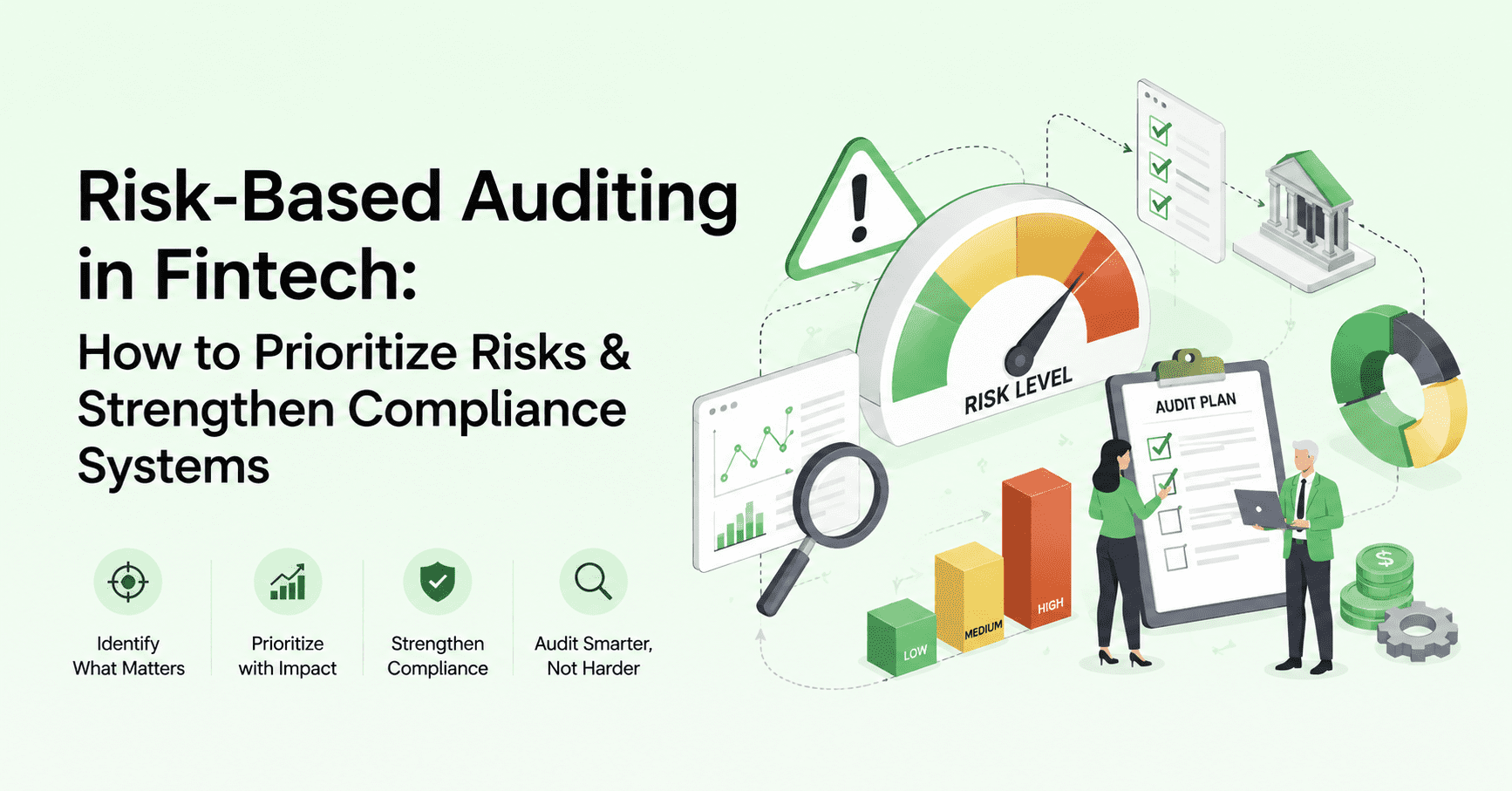
You cannot prioritize what you cannot quantify. The foundation of any risk-based audit fintech operation is a robust risk scoring model. This mathematical model evaluates vulnerabilities based on two primary metrics:
- Impact: The financial, reputational, or regulatory damage if the risk actually materializes.
- Likelihood: The probability of the event happening based on historical data or system architecture.
Mature organizations adding depth to their fintech risk audit will also measure Risk Velocity, which calculates how fast a risk will impact the business once it is triggered. A sudden liquidity crisis has high velocity; a minor vendor service-level agreement (SLA) breach has low velocity.
When developing the risk audit process fintech leaders rely on, you must classify risks to determine your exact audit frequency.
Risk Prioritization Matrix for Fintechs
| Risk Level | Impact & Likelihood | Example Scenario | Audit Action Required |
| High (Tier 1) | High Impact, High Likelihood | Vulnerability in the core payment API; KYC (Know Your Customer) verification failures. | Continuous, real-time monitoring; immediate full-scope audit. |
| Medium (Tier 2) | Moderate Impact, High Likelihood | Third-party software downtime; minor delays in transaction reporting. | Quarterly review; targeted sampling. |
| Low (Tier 3) | Low Impact, Low Likelihood | Internal HR policy updates; minor website formatting errors. | Annual review; automated compliance checks. |
Applying this table to your risk based audit fintech methodology ensures your Chief Compliance Officer is never bogged down investigating Tier 3 issues when a Tier 1 fire is burning.
How to Prioritize Risks During a Fintech Risk Audit
Executing a risk-based audit fintech strategy requires ruthless prioritization. Not all risks deserve the same budget or headcount. Here is how to filter the noise:
1. Map the Regulatory Environment: Regulatory agencies change rules rapidly. Cross-reference your product features with current mandates. For instance, if you handle crypto-assets, prioritize the audit of your cross-border transaction ledgers over domestic marketing compliance.
2. Assess Operational Vulnerabilities: Look closely at your Banking as a Service (BaaS) providers. If your partner bank goes offline, your platform halts. Vendor risk is a massive, highly critical component of a modern fintech risk audit.
3. Evaluate Financial Controls: Burn rates and capital reserves are tight. Prioritize auditing the automated systems that manage user fund segregation. Mixing operational funds with user deposits is a fast track to regulatory shutdown.
To systematically map these areas without missing foundational elements, cross-referencing a structured guide like The Ultimate Trust Audit Checklist for Fintech Companies (2026 Edition) ensures your initial risk universe is comprehensive. Once mapped, the risk audit process fintech framework dictates where you strike first.
Real-World Case Study: Navigating a Risk Based Audit in Fintech
Consider the growing pains of rapid scaling neobanks. When customer acquisition outpaces compliance infrastructure, the resulting gap is a regulatory minefield.
A clear example of this is the high-profile regulatory intervention regarding N26. According to directly reported actions by the German Federal Financial Supervisory Authority (BaFin), the rapid growth of the neobank outpaced its AML and risk management controls, prompting the regulator to put a strict cap on how many new customers the bank could onboard monthly.
Illustrative Breakdown: If a hyper-growth institution utilizes a traditional audit schedule, then checking AML protocols just once a year means they completely miss the spike in risk velocity caused by adding thousands of users a day. By adopting a risk-based audit fintech approach, an institution flags the surging user volume as a “High Likelihood / High Impact” event.
They then shift to continuous, automated auditing for KYC, effectively solving the compliance bottleneck before regulators cap their growth. The result of a proactive fintech risk audit is the ability to scale without regulatory handcuffs. This evolution from static checking to dynamic monitoring is explored further in our deep dive on Real-Time vs Traditional Auditing in Fintech. Building a responsive risk audit process for fintech ecosystem is the only way to sustain hyper-growth.
Top Benefits of Adopting a Fintech Risk Audit Framework
Transitioning to a dynamic risk audit process fintech model directly impacts your runway and bottom line and keeping the regulators happy with it, is the cherry on top. The Thomson Reuters Cost of Compliance Report consistently highlights that compliance costs and regulatory fatigue are top barriers to profitability for financial firms. A targeted approach solves this.
- Optimal Resource Allocation: You stop wasting expensive auditor hours on low-risk departments. A risk-based audit fintech structure directs premium talent to complex problems.
- Proactive Threat Mitigation: Because you are auditing based on emerging risk velocity, you catch vulnerabilities, like a failing API, before they are exploited by bad actors.
- Enhanced Board Reporting: A quantitative fintech risk audit provides the executive board with hard data on where the company is exposed, moving conversations from vague compliance worries to actionable risk metrics.
A mature risk-based audit fintech architecture transforms your compliance department from a necessary cost center into a strategic advantage, allowing the business to launch new financial products faster, knowing the safety nets are dynamically placed.
Conclusion
Shifting to a risk-based audit fintech framework is a non-negotiable step for any financial technology company looking to scale safely. By deploying accurate risk scoring models and ruthlessly prioritizing high-impact vulnerabilities, you protect your capital, secure user trust, and avoid catastrophic regulatory roadblocks.
The smartest startups don’t try to audit everything—they audit the things that matter most. An optimized risk audit process fintech strategy is the key to sustainable growth.
Stop wasting resources on static, calendar-based compliance checks. Upgrade your fintech risk audit capabilities today. Contact Us to implement the Fintly Trust Audit and secure your platform.

QUICK ANSWERS
Frequently Asked Questions (FAQ)
Your most common questions, answered with precision and insight
A risk-based audit fintech methodology prioritizes internal auditing resources based on the severity and likelihood of specific threats. Instead of reviewing every department equally, it focuses strictly on high-impact areas like regulatory compliance, AML, and financial security.
A traditional audit follows a rigid checklist, treating all operational areas the same regardless of threat level. A fintech risk audit is dynamic, frequently adjusting its focus based on real-time data, business growth, and emerging regulatory threats in the market.
A risk scoring model is a quantitative tool used to evaluate threats by multiplying their potential impact by their likelihood of occurring. It is the foundational step in building an effective risk audit process fintech framework.
You prioritize risks by assessing the regulatory landscape, analyzing third-party vendor vulnerabilities, and evaluating risk velocity. In the risk audit process fintech leaders use, high-impact and high-likelihood risks are always audited first.
Startups have limited capital and lean compliance teams. Using a risk-based audit fintech approach ensures they do not waste scarce resources on low-level administrative checks, keeping them entirely focused on preventing critical regulatory fines or data breaches.

Author
Subject Matter Expert (Lending) Fintly.co
Vijay Mali is a results-driven professional with deep expertise in HFC/NBFC startups, compliance, and underwriting. He specializes in delivering end-to-end solutions for financial institutions, focusing on Business Rule Engines (BRE), workflow automation, and AI-driven credit decision-making. He is passionate about leveraging Machine Learning (ML) scorecards and AI-powered risk assessment to optimize lending processes and drive digital transformation in the financial sector.