
Maker-Checker Workflow
Introduce controlled approvals across intervention activities and risk case management workflows.
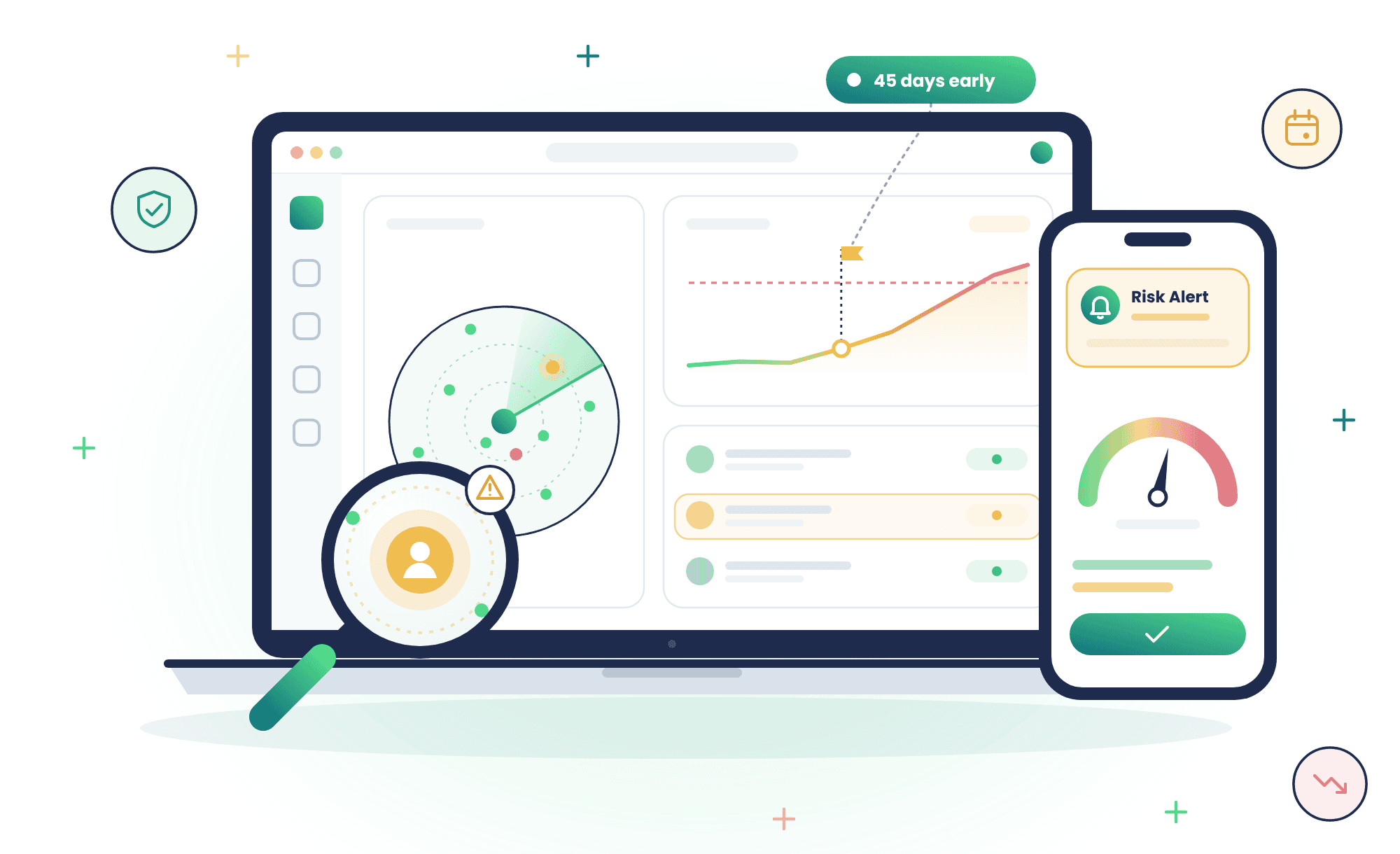
Most lenders identify risk only after repayment issues begin to surface. By then, intervention options are often limited. Fintly's Early Warning System (EWS) helps financial institutions detect credit risk earlier through continuous portfolio monitoring, predictive analytics and explainable risk intelligence.
Designed for banks, finance companies, digital lenders, licensed moneylenders, pawnbrokers and organisations managing SME, consumer and unsecured lending portfolios, EWS identifies early warning signals before delinquency escalates. Risk and collections teams gain the visibility needed to prioritise high-risk accounts, intervene sooner and strengthen portfolio performance.
256+
Customers Worldwide
99.999%
Uptime
Global Presence
Across 40+ Countries
Effective risk management requires more than alerts. It requires accountability, governance, and clear decision visibility. EWS combines AI-driven risk detection with controlled workflows, audit logging and explainable risk indicators to help institutions manage portfolio risk in a structured and governed way.
Introduce controlled approvals across intervention activities and risk case management workflows.
Track risk triggers, model outputs, workflow activities, approvals, and intervention actions from a central environment.
View risk score movements, triggering conditions and key borrower risk indicators that explain why an account has been flagged.
Support governance and operational oversight through controlled user permissions and access management.
Apply AI-driven risk scoring to identify customers showing early signs of financial distress, deterioration, or increased default risk.
Monitor configurable credit risk indicators, rule-based triggers and predictive risk patterns before accounts become delinquent.
Track borrower behaviour, payment performance, account trends, and exposure changes through a unified portfolio view.
Analyse score movements, trigger activations, historical patterns, and key risk drivers behind each risk assessment.
Convert portfolio alerts into actionable cases and manage intervention activities through structured workflows.
Combine repayment behaviour with refreshed bureau data from Credit Bureau Singapore and the Moneylenders Credit Bureau, returned GIRO payments and, with borrower consent, CPF contribution changes via Myinfo.
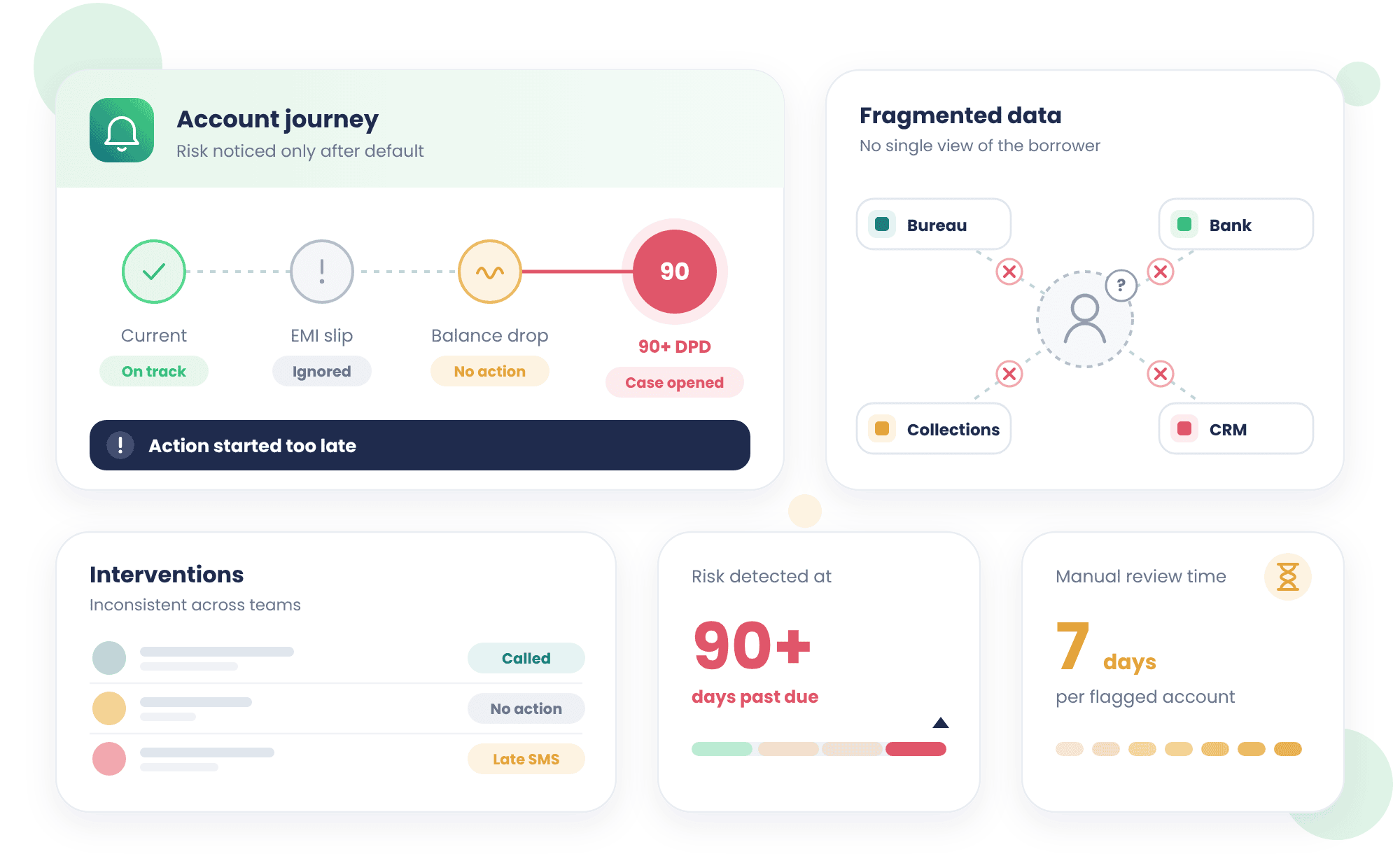
Many lenders still rely on periodic reviews, manual monitoring and reactive collections processes. This makes it difficult to identify emerging risk trends, prioritise interventions, and maintain consistent oversight across growing portfolios.
For institutions managing SME lending, unsecured lending and multi-product portfolios, delayed risk identification can affect asset quality, collections effectiveness and operational performance.
Import portfolio files and automatically validate customer records, reporting periods, field consistency, and data quality.
Use predictive risk models and business rules to identify emerging credit risk indicators and early warning signals.
Automatically create cases for borrowers displaying elevated risk, behavioural changes, or signs of financial stress.
Route cases through maker-checker workflows, assign ownership, and maintain oversight of intervention decisions.
Monitor retail, SME, and commercial lending portfolios more effectively through proactive credit risk monitoring and portfolio-level visibility.
Identify changing borrower behaviour earlier and prioritise risk mitigation activities before delinquency worsens.
Scale portfolio monitoring through automated risk detection and continuous borrower assessment.
Improve oversight of unsecured lending portfolios through structured risk monitoring and intervention workflows.
Track pledge maturity, redemption likelihood and collateral value changes so branches can act before pledges lapse to auction.
Monitor SME borrower performance and identify emerging stress indicators before repayment issues affect portfolio quality.
EWS is designed to integrate with lending, collections and analytics environments so institutions can strengthen risk monitoring without disrupting existing operations.
Rather than creating another standalone system, EWS helps organisations convert borrower, repayment and portfolio data into continuous risk intelligence that supports proactive portfolio management.
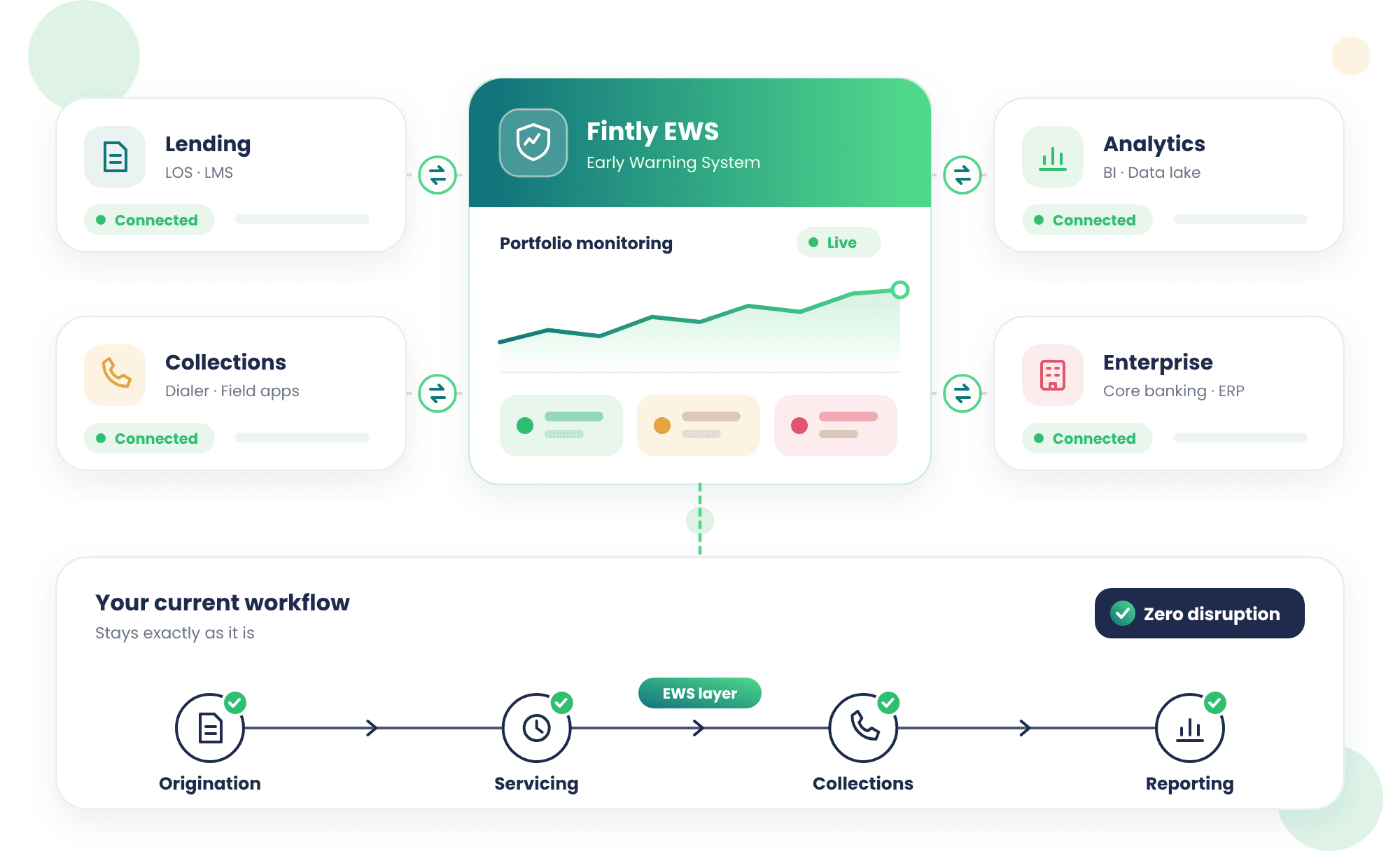
Comparison of traditional monitoring versus Fintly EWS

An Early Warning System is a credit risk monitoring platform that identifies borrowers showing signs of financial stress before delinquency or default occurs. It enables lenders to intervene earlier and strengthen portfolio monitoring practices.
EWS combines predictive risk scoring, portfolio monitoring, early warning indicators and case management workflows to help institutions identify higher-risk accounts and act before credit quality deteriorates.
Early warning signals are indicators that may suggest increased borrower risk. These can include score movements, payment behaviour changes, exposure trends, triggered business rules, or other risk indicators identified through monitoring processes.
The platform identifies higher-risk borrowers and generates risk cases, allowing collections teams to focus resources on accounts that may require earlier intervention or closer monitoring.
Yes. EWS provides visibility into risk drivers, score movements, trigger activations and historical risk patterns, so users can better understand why an account was flagged.
Yes. The platform can support portfolio monitoring across SME lending portfolios by identifying emerging borrower stress indicators and enabling proactive intervention workflows.
EWS is designed to help institutions strengthen portfolio monitoring, risk governance, and intervention oversight. Institutions remain responsible for meeting their own regulatory obligations. With the MAS Guidelines on AI Risk Management effective from 7 October 2027, EWS model inventories, validation reports and audit trails can support institutions' preparation.
The platform includes role-based access controls, audit logs, and governed workflows. Organisations should evaluate deployment and operational configurations against their own PDPA obligations and internal data governance policies.
Give your risk and collections teams the intelligence they need to identify risk earlier, prioritise interventions and improve portfolio oversight.
See how Fintly's Early Warning System helps lenders transform portfolio monitoring from a reactive process into a proactive risk management capability.