
Explainable AI Credit Scoring
Generate interpretable scoring outputs using explainability frameworks that help users understand key drivers behind risk predictions.

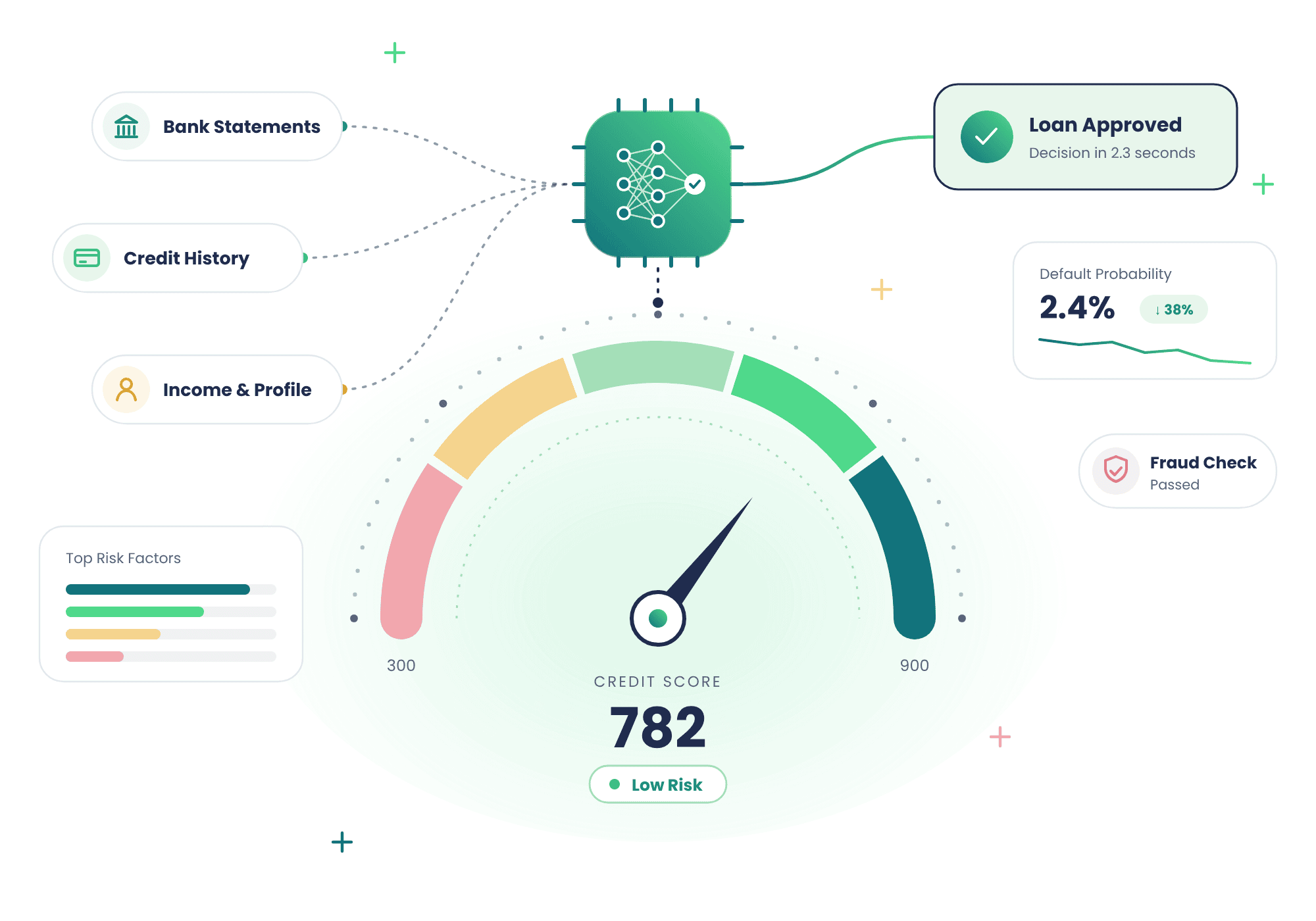
Traditional credit scoring models often struggle to keep pace with changing borrower behaviour, evolving risk patterns, and growing lending portfolios. Fintly's ML ScoreEngine helps financial institutions improve credit risk assessment through machine learning credit scoring, predictive analytics and explainable AI decisioning.
Designed for banks, finance companies, digital lenders, fintech lending platforms and licensed moneylenders, ML ScoreEngine enables risk teams to build, deploy and optimise predictive models without extensive dependence on specialist data science resources. The result is faster automated credit scoring, better risk segmentation, and greater confidence in lending decisions.
256+
Customers Worldwide
99.999%
Uptime
Global Presence
Across 40+ Countries
Credit scoring models influence high-impact business decisions. ML ScoreEngine is designed to help institutions strengthen model governance, scoring transparency, and operational oversight throughout the model lifecycle.
Generate interpretable scoring outputs using explainability frameworks that help users understand key drivers behind risk predictions.
Maintain a model inventory with materiality ratings, validation reports and monitoring evidence to support preparation for the MAS Guidelines on AI Risk Management, effective from 7 October 2027.
Maintain visibility into model versions, performance history, and scoring activities from a central environment.
Support traceability through scoring logs, calculation history, and model lifecycle monitoring.
Train predictive models using structured datasets without relying heavily on data science teams. Upload datasets, validate inputs, and create reusable scoring models through a business-friendly environment.
Evaluate borrower applications through predictive models that identify risk patterns and support more informed lending decisions.
Improve credit risk prediction through ML-driven scoring models designed to identify probable risk segments and portfolio vulnerabilities.
Support explainability through model insights that help risk teams understand the factors influencing individual scores and predictions.
Support individual credit applications as well as large-volume portfolio assessments through scalable scoring workflows.
Build features from Myinfo income and CPF contribution history (with consent), Credit Bureau Singapore and Moneylenders Credit Bureau data, and bank statement analysis from Fintly IDP.
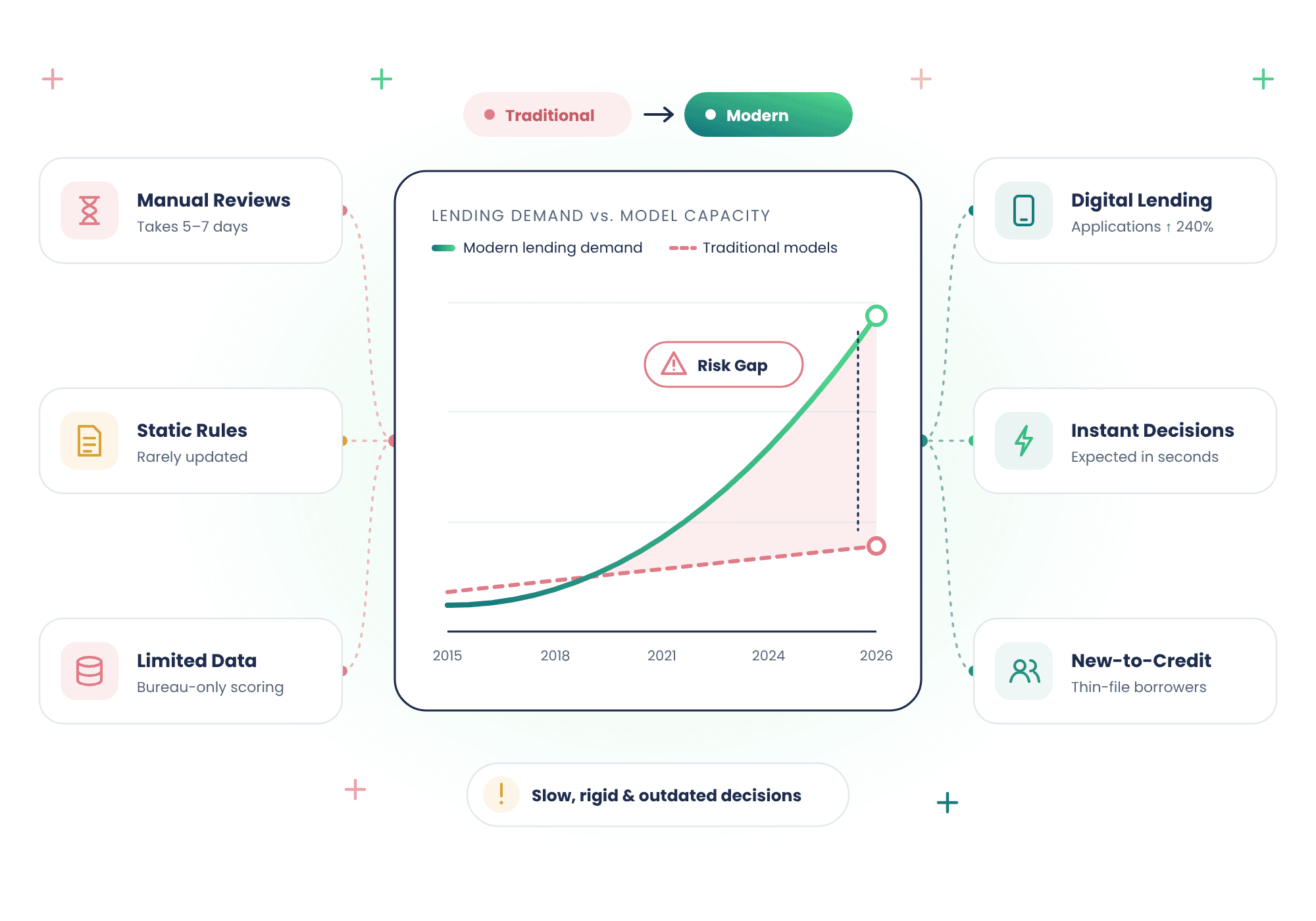
Many institutions still depend on static scorecards, manual reviews, and fragmented risk assessment processes. These approaches can make it difficult to respond to changing borrower behaviour, identify emerging risks, and scale lending operations efficiently.
As competition increases across Singapore's lending landscape, risk and credit teams need greater agility without losing control or transparency.
Upload and validate structured datasets using guided workflows designed to simplify preparation and model creation.
Build machine learning models through automated training processes without extensive coding or specialist expertise.
Analyse model performance through ROC-AUC, Gini, KS Score and explainability insights to validate model effectiveness.
Apply scoring models to applications or portfolios and refine approval thresholds based on risk appetite and business goals.
Improve borrower selection, strengthen credit risk assessment, and enhance portfolio quality through predictive scoring models.
Create more consistent underwriting decisions while improving operational efficiency and risk segmentation.
Scale automated credit assessment workflows and improve digital lending experiences through AI-powered scoring.
Support SME credit evaluation through predictive risk assessment and configurable scoring models.
Assess borrowers with limited credit history more consistently, with explainable outputs that support each lending decision.
ML ScoreEngine is designed to operate alongside existing lending and risk technology investments. API-ready deployment capabilities make it easier to integrate scoring outputs into decision workflows and operational systems.
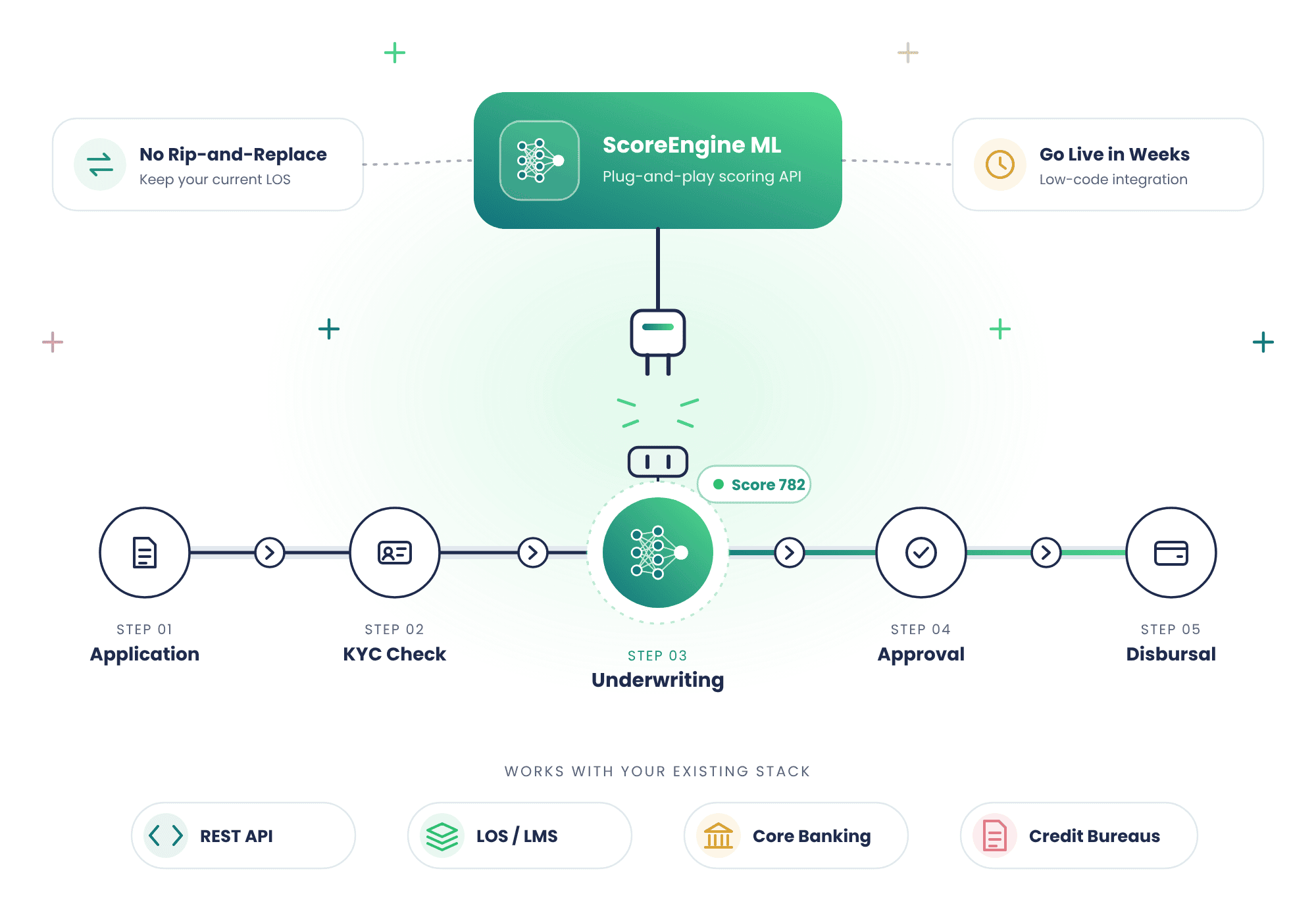
Comparison of traditional credit scoring versus Fintly ML ScoreEngine
ML ScoreEngine is Fintly's machine learning scoring platform that enables financial institutions to build, deploy and manage predictive credit scoring models within a governed environment. It combines model training, scoring, performance analytics, and explainability capabilities.
Traditional scorecards typically rely on predefined variables and periodic updates. Machine learning scoring models can identify complex patterns in historical data, helping institutions improve risk segmentation, credit risk prediction and lending decision quality.
Yes. ML ScoreEngine includes no-code model training capabilities that allow business users and risk teams to create and deploy predictive models without significant coding knowledge.
Yes. The platform is designed to provide explainability insights and transparent scoring outputs to help users understand factors contributing to model predictions and lending decisions.
The platform is designed to work with structured datasets and may be able to support data from approved credit information sources, depending on integration and implementation requirements. Direct connectivity to Credit Bureau Singapore and the Moneylenders Credit Bureau is on the Singapore roadmap.
ML ScoreEngine is designed to support transparency, explainability, and governance objectives that institutions often consider when implementing responsible AI frameworks. Institutions remain responsible for their own governance and regulatory obligations.
ML ScoreEngine provides model inventories, materiality tagging, validation and performance reports, and audit trails that can support institutions preparing for the Guidelines, effective from 7 October 2027. Institutions remain responsible for their own compliance.
Yes. ML ScoreEngine can support predictive risk assessment approaches for SME lending portfolios, including thin-file applicants and evolving borrower segments, subject to available data and model design.
Implementation varies based on integration scope, deployment model, data preparation requirements, and governance processes.
See how ML ScoreEngine helps financial institutions improve automated credit scoring, strengthen risk assessment, and deploy explainable machine learning models with greater confidence.
Support smarter lending decisions, stronger governance, and scalable growth through predictive credit intelligence.